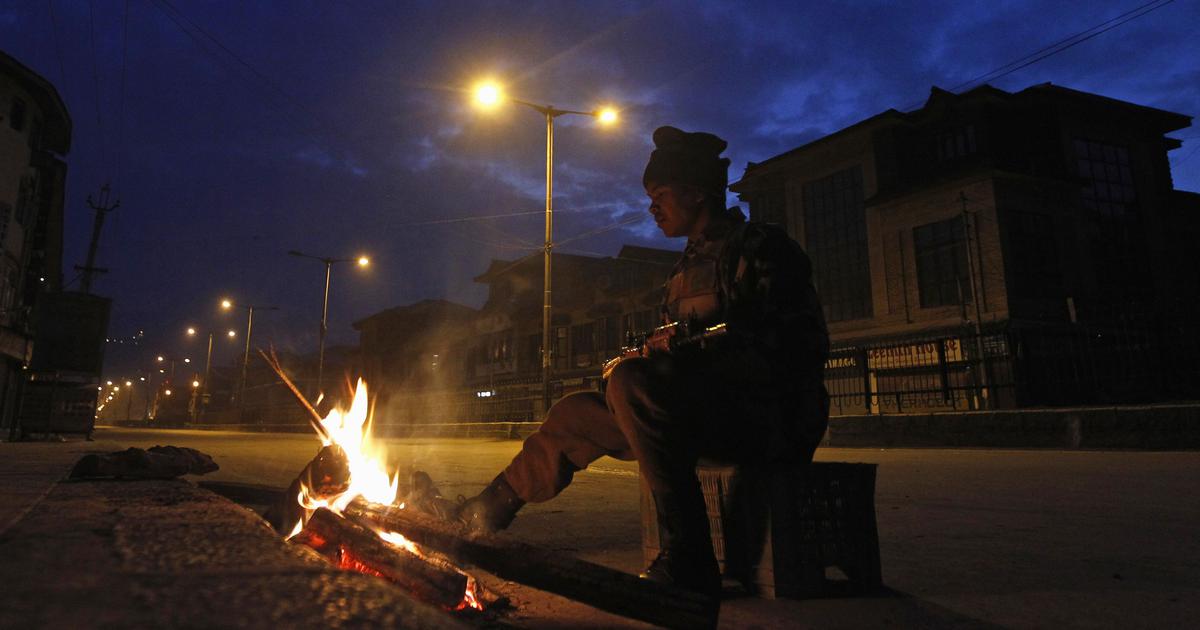
The lackadaisical attitude of Indian Police Service officers leading central armed forces is a key reason why training is accorded low priority.
That the Pulwama attack of February 14 was the result of an intelligence failure is not in doubt. The scale of the tragedy, however, was also down to the lack of proper training of the Central Reserve Police Force personnel. Rajnish Rai, inspector general of the paramilitary force, appears to have confirmed as much.
According to news reports, Rai has written several letters to the CRPF headquarters, complaining about the lack of infrastructure at the three prestigious “Counter Insurgency and Anti Terrorism Schools”, one of which, in Shivpuri, Madhya Pradesh, has been in existence for nearly a decade.
This is quite alarming given the CRPF is mandated to fight internal security challenges and is at the vanguard of the counterinsurgency operations in Kashmir, Central India and the North East. Yet, in spite of repeated failures in Kashmir and the Maoist heartland, the CRPF’s leadership has failed to remedy the situation.
In fact, the standard and orientation of training for all central armed forces has steadily deteriorated over the years despite well-conceived training structures being in place. There are training institutions catering to the requirements at force and zonal levels as well as the system of company collective training at the unit level.
While the lack of infrastructure as noted by Rai may indeed be a problem, repeated setbacks during counterinsurgency operations point to a systemic failure and the leadership’s inability to comprehend the training needs, analyse performance gaps and take remedial measures.
The lackadaisical attitude of Indian Police Service officers leading the central forces – the CRPF chief is from the IPS – is a key reason why training is accorded low priority. Seeped in police culture, they consider posting to a training centre punishment, and see training as a peripheral activity, leading to this sorry state of affairs.
My own experience in the Border Security Force is that it is a rare IPS leader who comprehends the necessity of good training for success of operations. In fact, the post of Inspector General for Training, responsible for formulating training policies, was treated as an ornamental position for officers nearing retirement or to facilitate those who needed to get an accommodation in Delhi before moving on to the North East or Kashmir, entitling them to keep the place.
 Global News
Leave a comment